The Historicity Gate
Three tests, all failed — and what follows for reading Plato
The question
How should the historicity of Socrates bear on his philosophy in Plato's dialogues?
1
Are the sources the right kind of text?
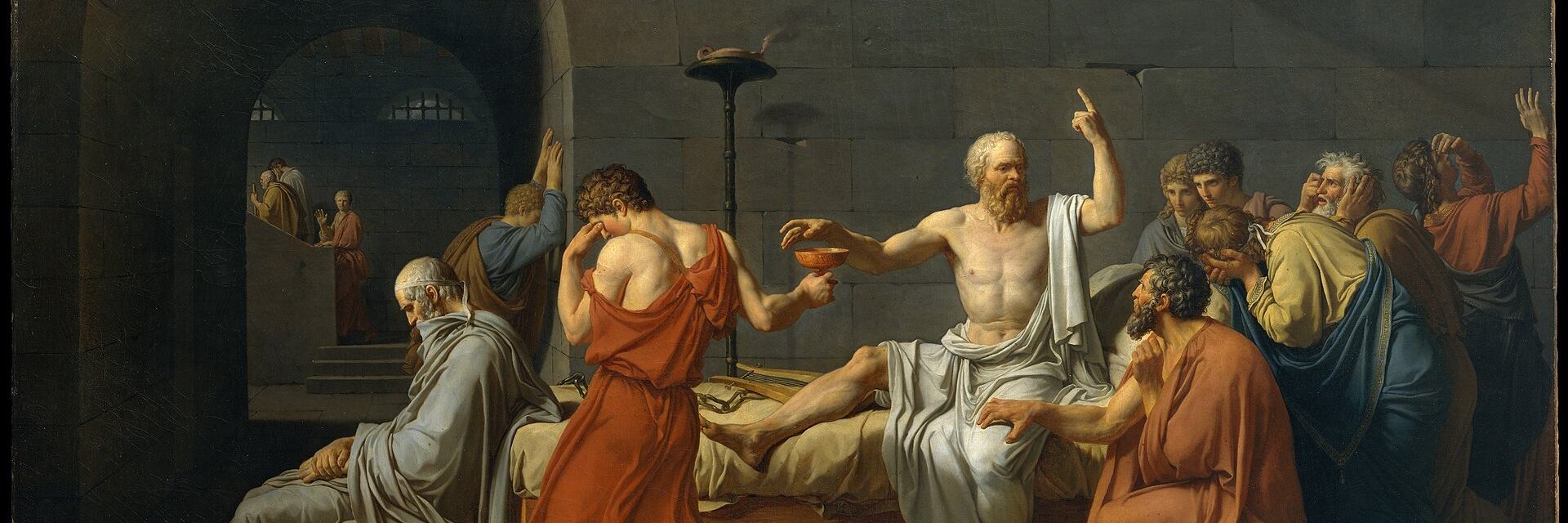
Aristotle coined Sōkratikoi logoi and classed them as mimēsis — historical characters in fictional settings. Dorion: the Socratic problem "rests on a misunderstanding," namely that Plato and Xenophon intended faithful report. "Everything seems to indicate that neither… set out with the intention of faithfully reporting Socrates' ideas."
Dorion, CCS ch. 1, pp. 6–8Waterfield, Bloomsbury ch. 1, p. 9
No — demanding fidelity is a category mistake about the genre
2
Does agreement between sources corroborate?
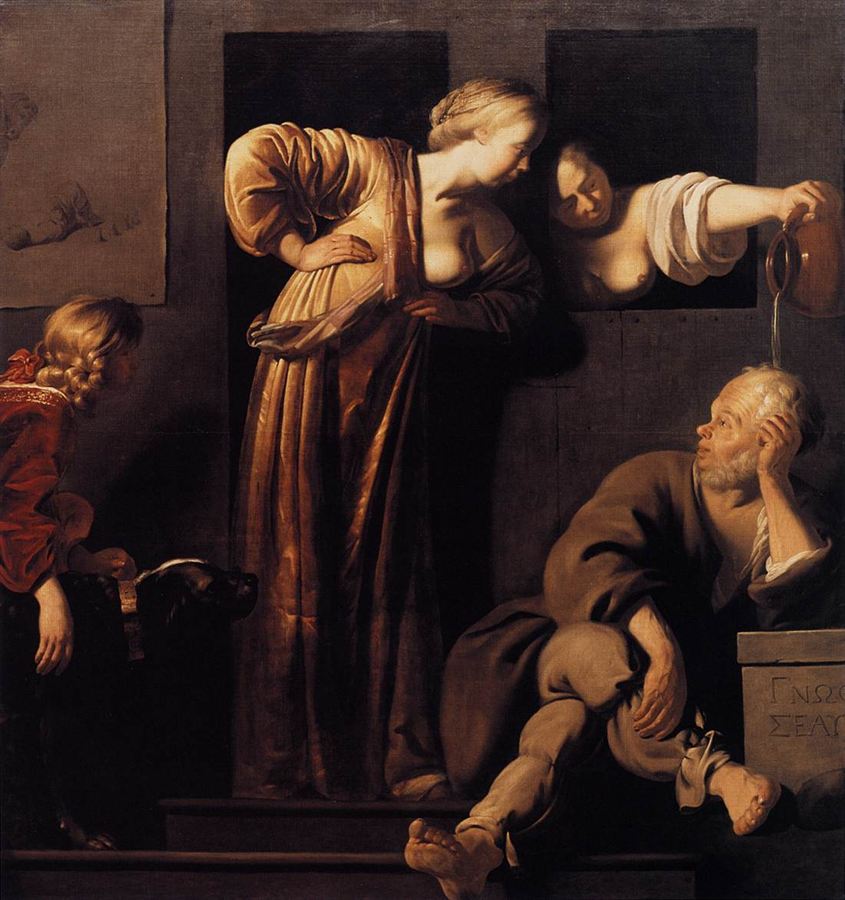
The figure was circulating before the prose tradition: seven comedies by five poets in one decade, and comedy shaped the logoi — Flatterers → Protagoras, Autolycus → Xenophon's Symposium. Bromberg: the plays "helped thrust Socrates… out of anonymity." So echoes are inheritance, not testimony: "more appropriate to talk of intertextuality than of historical veracity."
Bromberg, Stavru & Moore, pp. 34, 44, 55Waterfield, p. 11
No — convergence is a literary fact, not a corroborating one
3
Would a historical result change the philosophy?
Even granting every developmental thesis: "we are left with no more than differences between two portraits of Socrates, one composed by early Plato and the other later; we have no reason for going on to say that the earlier portrait is a likeness of the historical Socrates." The doctrinal difference is in the texts either way. Historicity is an extra claim laid on top.
Waterfield, p. 6, against Vlastos
No — the arguments are unchanged by the answer
Therefore
Index philosophical claims to texts, not to persons. "Socrates" in Plato is a position bearing a name, not a witness being quoted.
The Laches holds P₁; the Meno holds P₂. Who first held P₁ is a separate question with a separate evidence base, and answering it either way leaves every argument in the dialogues exactly where it stood.
Where it stays idle
Doctrine and argument. Nothing in the elenchus, the proof-language, or the Meno's repair depends on who the man was.
Where it comes back
Reception — ask what the name did in the culture and the comic, tragic and biographical material becomes admissible again. And chronology, which still needs an order.
The honest residue
"There must be traces… otherwise Socrates would not have been chosen as their protagonist, but we lack grounds for identifying such traces." He existed, shaped it, is not extractable.
 τί ἐστι;