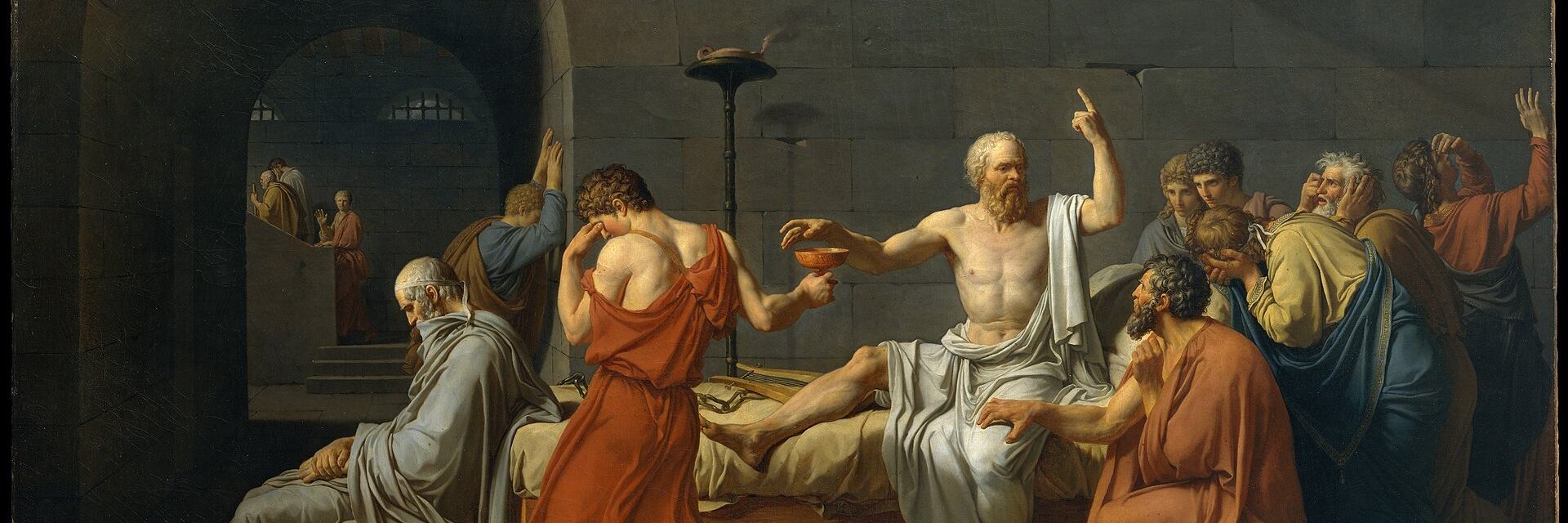
Parmenides Publishing, 2005; original text published in 1983
The question this book asks
Can Aristotle’s puzzling reports about Plato be recovered from the written dialogues?
Sayre argues that the Philebus contains a late ontology in which Forms and sensible things derive from common principles. Unity or Limit determines the Unlimited; Forms function as fixed measures through which sensible things acquire identity. The 2005 introduction qualifies the original treatment of the Good.
How to read. Start with the conclusion, then trace its support through each unit’s map, terms, explanations, source passages, explicit premises, and limits. Everything is contained in this page and works offline. On small screens, readable text maps replace the larger interactive maps.
Evidence and page numbers. Quotations were checked against your supplied PDF. Printed page numbers are primary; file-page numbers are supplied separately. Whitespace, line-break hyphenation, and typographic ligatures are normalized. Quotations are short excerpts; explanations, examples, premise labels, and maps are the guide’s reconstruction. Kenneth M. Sayre’s readings are interpretations of Plato, not uncontested statements of Plato’s doctrine.
AUTHOR · direct passagesGUIDE · explanation and reconstructionLIMITS · assumptions to assess
Sayre reads the dialogue as exposing radical separation and investigating the conditions under which unity and multiplicity can be intelligibly related.
They address the status of sensible objects, the conditions of knowledge, and participation, but do not yet supply the final common-principle ontology.
The introduction announces a hypothesis to be tested. Similar vocabulary alone would not establish equivalent doctrines, and a successful interpretation of some reports would not vindicate everything Aristotle says about Plato.
The terms doing the work
Middle-period theory
The model of stable, independent Forms explaining changing sensible things.
Participation
The relation through which sensible things receive their characters from Forms.
Late ontology
Sayre’s reconstruction of a theory in which Forms themselves are derivative.
Part One · Close reading
Read the argument in detail
Short passages support the central claims. The surrounding explanations distinguish the author’s interpretation from the guide’s reconstruction.
01State the historical problem
Aristotle attributes doctrines to Plato about Unity, the Great and the Small, Forms, and numbers. These do not look like the familiar theory of independent Forms. Sayre asks whether the written dialogues contain the reported doctrines in a different vocabulary. He neither accepts every Aristotelian report uncritically nor assumes that the relevant teaching was confined to unwritten instruction.
SAYRE · SOURCE
“the main tenets attributed to Plato in the first book of the Metaphysics in fact are present in the Philebus.”
Printed p. 13 · PDF p. 42
What this supports. This excerpt states the book’s central interpretive hypothesis.
02Identify the philosophical problem
A theory of radically different Forms and sensible things must explain how they are related. Saying that things participate or resemble Forms can restate the dependence without explaining it. The theory must also explain the persistence and identity of sensible things and the possibility of knowledge. Sayre reads late dialogues as attempts to address this interconnected set of problems. See pp. 13–15.
03Announce the change in the status of Forms
In the reconstructed late account, Forms are constituted from Unity and the Unlimited, while sensible things depend on Forms and the same Unlimited. Forms retain explanatory priority over their instances, but cease to be ultimate principles independent of everything else. This shared basis is supposed to remove the radical separation that made participation obscure.
SAYRE · SOURCE
“Like sensible objects, Forms now are constituted from more basic principles.”
Printed p. 14 · PDF p. 43
What this supports. The thesis concerns ontological derivation, not a chronological creation of Forms.
Part Two · Premises and conclusion
The argument made explicit
A reconstruction of the reasoning; these labels are not the author’s numbered premises.
P1
Aristotle reports a doctrine that appears absent from the familiar theory of Forms.
P2
The late dialogues address problems left by that theory.
P3
Different terminology may conceal equivalent principles.
C · Conclusion
Read the Philebus and Parmenides alongside Aristotle to test this proposed equivalence.
Assumptions and inference limits
What still needs assessment
The introduction announces a hypothesis to be tested. Similar vocabulary alone would not establish equivalent doctrines, and a successful interpretation of some reports would not vindicate everything Aristotle says about Plato.
Check your understanding
How does the evidence support the main conclusion: The apparent conflict between Aristotle’s reports and Plato’s dialogues may reflect different vocabularies rather than a missing esoteric system.? Identify which step you would challenge first, and explain whether your objection concerns the text, the inference, or a premise.
Kenneth M. Sayre · Reading guide
Chapter 1 · Plato’s Break with the Middle Period
Printed pp. 18–74
Question and main conclusion
What does the Parmenides contribute to an alternative ontology?
Sayre reads the dialogue as exposing radical separation and investigating the conditions under which unity and multiplicity can be intelligibly related.
00The argument as a map
Open a branch to follow the reasoning. “Read” takes you to its explanation.
Plato’s Break with the Middle Period
Expand branches, drag to pan, or open full screen.
Scroll normally; hold Ctrl or ⌘ to zoom. A complete text map is below.
Guide’s reconstruction. Connections show explanatory dependencies, not independently proven implications.
Read the complete map as text
What does the Parmenides contribute to an alternative ontology?
Sayre’s proposed solution is stronger than correcting a single faulty inference.
Source passage — This approach bears no sign of the separation thesis. · p. 37
Use the architecture of the hypotheses Read section
Sayre pairs hypotheses I–VI, II–V, III–VII, and IV–VIII.
Connect unity and multiplicity to number and becoming Read section
The discussion of equality, inequality, and the instant suggests a mathematical setting in which determinate limits articulate otherwise indefinite continua.
Source passage — The effect of these observations is to recommend further investigation of the possibility that such may be the case. · p. 74
The constructive interpretation of the hypotheses and the mathematical background are disputed. Showing that a proposed ontology is coherent is not yet proving that Plato accepted it or that the ontology is true.
The terms doing the work
Radical separation
Forms and sensibles treated as so independent that their explanatory relation becomes obscure.
Hypothesis pairing
Reading the eight hypotheses through their differing assumptions and consequences.
Unlimited multitude
Indeterminate multiplicity considered apart from the unity or limits needed for determination.
Part One · Close reading
Read the argument in detail
Short passages support the central claims. The surrounding explanations distinguish the author’s interpretation from the guide’s reconstruction.
01Read the two halves together
The first part’s objections concern participation, likeness, regress, and the availability of Forms to knowledge. The second part is not an unrelated exercise on Sayre’s reading: it examines assumptions about unity and plurality that bear on those difficulties. A dramatic argument need not be Plato’s own final assertion. Its role in a larger examination matters. See pp. 18–37.
02Move beyond the separation thesis
Sayre’s proposed solution is stronger than correcting a single faulty inference. He treats the objections as pressure to abandon radical separation and construct a different relation between Forms and sensible things. The Philebus supplies the later positive answer, while the Parmenides prepares its conditions.
SAYRE · SOURCE
“This approach bears no sign of the separation thesis.”
Printed p. 37 · PDF p. 66
What this supports. The sentence refers to the new approach in the Philebus that Sayre contrasts with the earlier theory.
03Use the architecture of the hypotheses
Sayre pairs hypotheses I–VI, II–V, III–VII, and IV–VIII. The point is to compare corresponding consequences under differing assumptions, rather than treating every assertion as part of one contradictory doctrine. On his interpretation, strict isolation of Unity and others defeats intelligibility, whereas their appropriate relation supports determinate multiplicity. See pp. 37–62. The pairing is an interpretive proposal, not the only accepted organization.
04Connect unity and multiplicity to number and becoming
The discussion of equality, inequality, and the instant suggests a mathematical setting in which determinate limits articulate otherwise indefinite continua. Sayre explores possible connections with the ancient treatment of incommensurables. This offers a way toward understanding the Great and the Small, but the chapter deliberately stops short of a historical demonstration.
SAYRE · SOURCE
“The effect of these observations is to recommend further investigation of the possibility that such may be the case.”
Printed p. 74 · PDF p. 103
What this supports. The chapter’s ending marks the mathematical connection as a hypothesis for further inquiry.
Part Two · Premises and conclusion
The argument made explicit
A reconstruction of the reasoning; these labels are not the author’s numbered premises.
P1
Radical separation leaves participation and knowledge insufficiently explained.
P2
The hypotheses examine what follows from isolation or relation between Unity and others.
P3
Determinate multiplicity requires an appropriate relationship with unity.
C · Conclusion
A model of limit imposed on indeterminacy becomes a candidate for a revised ontology.
Assumptions and inference limits
What still needs assessment
The constructive interpretation of the hypotheses and the mathematical background are disputed. Showing that a proposed ontology is coherent is not yet proving that Plato accepted it or that the ontology is true.
Check your understanding
How does the evidence support the main conclusion: Sayre reads the dialogue as exposing radical separation and investigating the conditions under which unity and multiplicity can be intelligibly related.? Identify which step you would challenge first, and explain whether your objection concerns the text, the inference, or a premise.
Kenneth M. Sayre · Reading guide
Chapter 2 · Historical Glimpses at the Emerging Theory
Printed pp. 75–117
Question and main conclusion
How should Unity, the Great and the Small, and Forms as numbers be understood?
Aristotle and his commentators supply a vocabulary bridge; mathematical comparisons help make that bridge intelligible but remain conjectural.
00The argument as a map
Open a branch to follow the reasoning. “Read” takes you to its explanation.
Historical Glimpses at the Emerging Theory
Expand branches, drag to pan, or open full screen.
Scroll normally; hold Ctrl or ⌘ to zoom. A complete text map is below.
Guide’s reconstruction. Connections show explanatory dependencies, not independently proven implications.
Read the complete map as text
How should Unity, the Great and the Small, and Forms as numbers be understood?
Separate five reports before explaining them Read section
Sayre isolates five claims: numbers arise from the Great and the Small through Unity; sensible things are constituted from Forms and the Great and the Small; Forms are constituted from Unity and the Great and the Small; Forms are numbers; and the Good is Unity.
Treat the history as a controlled hypothesis Read section
The chapter is designed to propose fruitful interpretations whose consequences can be tested against the Philebus.
Source passage — The structure of argument in this chapter is basically hypothetical. · p. 76
Historical plausibility and mathematical coherence do not establish actual influence. Sayre admits that the evidence is too sparse for certainty about Eudoxus, Plato, and the exact development of the relevant mathematics.
The terms doing the work
Great and the Small
A principle of indefinite variation, not simply a very large object plus a very small one.
Indefinite Dyad
Another ancient designation connected with that principle.
Measure
A determinate standard or relation; not merely a counting integer.
Part One · Close reading
Read the argument in detail
Short passages support the central claims. The surrounding explanations distinguish the author’s interpretation from the guide’s reconstruction.
01Separate five reports before explaining them
Sayre isolates five claims: numbers arise from the Great and the Small through Unity; sensible things are constituted from Forms and the Great and the Small; Forms are constituted from Unity and the Great and the Small; Forms are numbers; and the Good is Unity. These must be distinguished before one can judge whether the Philebus explains them. The last becomes the most qualified claim in the 2005 reassessment. See pp. 84–95.
02Treat the history as a controlled hypothesis
The chapter is designed to propose fruitful interpretations whose consequences can be tested against the Philebus. Reports of Plato’s teaching and ancient commentaries give clues, but the surviving evidence cannot settle every detail of the Academy’s history. Sayre’s criterion is whether the reconstruction clarifies otherwise puzzling passages.
SAYRE · SOURCE
“The structure of argument in this chapter is basically hypothetical.”
Printed p. 76 · PDF p. 105
What this supports. This states the methodological status of the historical reconstruction.
03Establish the terminological bridge
The Great and the Small is connected with the Indefinite Dyad, the Unlimited, and relations of more and less. Unity is connected with limitation and determination. If these connections are right, Aristotle’s unusual description can be compared with the Philebus without assuming that identical words must appear in both sources. Ancient testimony supports the bridge; the dialogue must then confirm its explanatory value. See pp. 95–103, 112–117.
04Use mathematics without importing a modern theory
A continuum of greater and lesser magnitudes can receive a determinate standard through limiting relations. Sayre explores this as a model for how measures are constituted. He explicitly distinguishes ancient magnitudes and numbers from Dedekind’s modern construction. The analogy is meant to illuminate the ancient doctrine, not identify it with modern real-number theory.
SAYRE · SOURCE
“Ascription of Dedekind’s theory to Eudoxus is an anachronism to be avoided.”
Printed p. 107 · PDF p. 136
What this supports. This is Sayre’s own warning against an overly strong historical identification.
Part Two · Premises and conclusion
The argument made explicit
A reconstruction of the reasoning; these labels are not the author’s numbered premises.
P1
List the reports that require explanation.
P2
Connect their terminology with the terminology of the dialogues through ancient evidence.
P3
Construct a plausible account of determination using measures and indefinite variation.
C · Conclusion
Test that account against the actual argument of the Philebus.
Assumptions and inference limits
What still needs assessment
Historical plausibility and mathematical coherence do not establish actual influence. Sayre admits that the evidence is too sparse for certainty about Eudoxus, Plato, and the exact development of the relevant mathematics.
Check your understanding
How does the evidence support the main conclusion: Aristotle and his commentators supply a vocabulary bridge; mathematical comparisons help make that bridge intelligible but remain conjectural.? Identify which step you would challenge first, and explain whether your objection concerns the text, the inference, or a premise.
Kenneth M. Sayre · Reading guide
Chapter 3 · The Philebus and the Good
Printed pp. 118–186
Question and main conclusion
How can Forms and sensible things share a basis without becoming identical?
Forms are fixed measures arising through limitation of the Unlimited; sensible things receive determinate identities by reference to those measures.
00The argument as a map
Open a branch to follow the reasoning. “Read” takes you to its explanation.
The Philebus and the Good
Expand branches, drag to pan, or open full screen.
Scroll normally; hold Ctrl or ⌘ to zoom. A complete text map is below.
Guide’s reconstruction. Connections show explanatory dependencies, not independently proven implications.
Read the complete map as text
How can Forms and sensible things share a basis without becoming identical?
The Philebus distinguishes Unlimited, Limit, Mixture, and Cause.
Constitute Forms and sensible things in different stages Read section
Limit or Unity fixes determinate reference points within indefinite ranges.
Source passage — Imposing Unity or Limit upon these continua results in fixed and unique reference points which admit quantitative comparison. · p. 175
Understand “Forms are numbers” through measures Read section
Sayre interprets the numerical character of Forms in terms of fixed standards and proportions.
Evaluate the bridge between Unity and Limit Read section
Sayre combines the dialogue, Aristotle’s reports, and the commentators to argue that Unity and Limit do the same relevant ontological work.
Source passage — Although evidence of this sort is not conclusive, and probably never could be by the nature of the case · p. 167
Read the original conclusion about the Good with the later qualification Read section
The original text associates goodness with measure, proportion, and the unity of the good mixture; it uses this to interpret Aristotle’s identification of Good and Unity.
Keep the generalization problem visible Read section
Music gives a relatively clear illustration of how a determinate structure organizes variation.
Source passage — For us to say just how the relevant measures in these latter cases could actually be specified, however, would require more resources than these dialogues provide. · p. 186
The move from standards of identification to ontological constitution is substantive. The measures for complex Forms remain unspecified. Unity–Limit equivalence is strongly argued but not conclusive, and the original account of the Good is qualified in 2005.
The terms doing the work
Limit
The principle that makes a range determinate through number, proportion, and measure.
Unlimited
Indefinite variation such as more and less, considered without fixed determination.
Due measure
An appropriate standard through which a thing or activity can be assessed.
Part One · Close reading
Read the argument in detail
Short passages support the central claims. The surrounding explanations distinguish the author’s interpretation from the guide’s reconstruction.
01Start with the one-and-many method
The “gift of the gods” requires inquiry to find the determinate intermediates between an initial unity and indefinite instances. In music, knowing merely that sound is one and that sounds are indefinitely many is not expertise. One must understand the structured intervals and kinds. Sayre connects this method with collection and division and with an ontology of Limit and Unlimited. See pp. 118–133.
02Interpret the fourfold division
The Philebus distinguishes Unlimited, Limit, Mixture, and Cause. Indefinite more-and-less admits no fixed amount simply as such. Limiting relations articulate it; mixtures exhibit determinate combinations, while cause accounts for their ordering. Sayre’s focus is the constitutive role of the first principles, not an assertion that the cause of every mixture has been fully explained. See pp. 133–155.
03Constitute Forms and sensible things in different stages
Limit or Unity fixes determinate reference points within indefinite ranges. These function as Forms. Sensible states then acquire identities through their relations to those standards. This is explanatory priority, not a story in which eternal Forms are manufactured at a date. The same Unlimited figures in both levels, so the relation between them no longer spans two utterly disconnected domains.
SAYRE · SOURCE
“Imposing Unity or Limit upon these continua results in fixed and unique reference points which admit quantitative comparison.”
Printed p. 175 · PDF p. 204
What this supports. The passage states how the reference points that function as Forms are constituted.
04Understand “Forms are numbers” through measures
Sayre interprets the numerical character of Forms in terms of fixed standards and proportions. The musical example is useful: an ordered scale allows performances to count as determinate notes or deviations. The claim is not that Justice is the integer three. Forms remain precisely characterizable standards, whereas sensible instances are identified by reference to them. Human discovery of a standard should not be confused with human invention of eternal reality. See pp. 161–177.
05Evaluate the bridge between Unity and Limit
Sayre combines the dialogue, Aristotle’s reports, and the commentators to argue that Unity and Limit do the same relevant ontological work. His case is cumulative: it is supported by the number of otherwise puzzling passages the interpretation makes intelligible. It is not a strict deduction from an explicit Platonic identity statement.
SAYRE · SOURCE
“Although evidence of this sort is not conclusive, and probably never could be by the nature of the case”
Printed p. 167 · PDF p. 196
What this supports. This excerpt qualifies the evidence immediately before Sayre says the equivalence is strongly supported.
06Read the original conclusion about the Good with the later qualification
The original text associates goodness with measure, proportion, and the unity of the good mixture; it uses this to interpret Aristotle’s identification of Good and Unity. The 2005 introduction calls that explanation less satisfactory and provisionally moves toward the Good as a unified field of being. Both stages belong in a guide to this edition. The detailed original argument is at pp. 168–174; the revision is at pp. xix–xx.
07Keep the generalization problem visible
Music gives a relatively clear illustration of how a determinate structure organizes variation. Extending this to Health, Beauty, or other complex Forms is harder. Sayre concedes that the dialogues do not provide the resources needed to specify all the relevant measures. Consequently, the model’s philosophical ambition exceeds its worked examples.
SAYRE · SOURCE
“For us to say just how the relevant measures in these latter cases could actually be specified, however, would require more resources than these dialogues provide.”
Printed p. 186 · PDF p. 215
What this supports. This qualifies the proposed extension to Health, Beauty, and similar Forms.
Part Two · Premises and conclusion
The argument made explicit
A reconstruction of the reasoning; these labels are not the author’s numbered premises.
P1
Indefinite variation alone supplies no fixed identities.
P2
Limit or Unity establishes determinate measures: Forms.
P3
Sensible things become identifiable by relation to these measures within the same relevant ranges.
P4
Forms retain priority but share more basic principles with sensibles.
C · Conclusion
This reconstructs the principal Aristotelian reports and offers a new account of participation.
Assumptions and inference limits
What still needs assessment
The move from standards of identification to ontological constitution is substantive. The measures for complex Forms remain unspecified. Unity–Limit equivalence is strongly argued but not conclusive, and the original account of the Good is qualified in 2005.
Check your understanding
How does the evidence support the main conclusion: Forms are fixed measures arising through limitation of the Unlimited; sensible things receive determinate identities by reference to those measures.? Identify which step you would challenge first, and explain whether your objection concerns the text, the inference, or a premise.
Kenneth M. Sayre · Reading guide
Appendix A · Knowledge and Ontology in the Intermediate Dialogues
Printed pp. 187–255
Question and main conclusion
Why does Sayre treat the Theaetetus, Sophist, and Timaeus as intermediate?
They address the status of sensible objects, the conditions of knowledge, and participation, but do not yet supply the final common-principle ontology.
00The argument as a map
Open a branch to follow the reasoning. “Read” takes you to its explanation.
Appendix A · Knowledge and Ontology in the Intermediate Dialogues
Expand branches, drag to pan, or open full screen.
Scroll normally; hold Ctrl or ⌘ to zoom. A complete text map is below.
Guide’s reconstruction. Connections show explanatory dependencies, not independently proven implications.
Read the complete map as text
Why does Sayre treat the Theaetetus, Sophist, and Timaeus as intermediate?
The earlier theory leaves three related questions: what sensible objects are, how knowledge is possible, and how participation works.
Source passage — These three problems (the status of sensible objects, the ontological requirements of knowledge, and the nature of participation) are addressed in the Theaetetus, the Sophist, and the Timaeus, respectively. · p. 187
Give knowledge an explanatory account Read section
In the Sophist, collection and division disclose which kinds can combine and which exclude one another.
Source passage — Philosophic knowledge distinguishes Kinds that combine and those that do not. · p. 222
Explain the alleged failure of the Timaeus Read section
Images of imprinting, receiving, and physical motion do not, in Sayre’s assessment, explain how changeless Forms account for changing characters while remaining radically separated.
Source passage — If the ontological theory of Forms and sensibles is to be rescued, it would appear, the thesis of radical separation must be relinquished. · p. 255
This account depends on Sayre’s developmental interpretation. The Timaeus need not be judged a failure by every reader, and the selected philosophical sequence does not itself establish dates of composition.
The terms doing the work
Intermediate
Sayre’s developmental grouping, not an uncontested chronology.
Collection and division
A method that articulates relations between kinds in the search for definition.
Receptacle
The receiving factor in the Timaeus whose explanatory success Sayre questions.
Part One · Close reading
Read the argument in detail
Short passages support the central claims. The surrounding explanations distinguish the author’s interpretation from the guide’s reconstruction.
01Assign each dialogue a task
The earlier theory leaves three related questions: what sensible objects are, how knowledge is possible, and how participation works. Sayre assigns central roles to the Theaetetus, Sophist, and Timaeus respectively. This appendix is therefore part of the book’s supporting argument rather than a miscellaneous supplement.
SAYRE · SOURCE
“These three problems (the status of sensible objects, the ontological requirements of knowledge, and the nature of participation) are addressed in the Theaetetus, the Sophist, and the Timaeus, respectively.”
Printed p. 187 · PDF p. 216
What this supports. The sentence states the appendix’s organizing principle.
02Give knowledge an explanatory account
In the Sophist, collection and division disclose which kinds can combine and which exclude one another. A successful logos grounds a true judgment rather than merely being appended to a judgment already formed. Sayre regards this as progress beyond metaphorical pictures of knowledge. Truth and falsehood can also be explained through what is or is not the case with a subject.
SAYRE · SOURCE
“Philosophic knowledge distinguishes Kinds that combine and those that do not.”
Printed p. 222 · PDF p. 251
What this supports. This states the relation between dialectical knowledge and the combinations of kinds.
03Explain the alleged failure of the Timaeus
Images of imprinting, receiving, and physical motion do not, in Sayre’s assessment, explain how changeless Forms account for changing characters while remaining radically separated. He treats this failure as a motive for the revised ontology. This is a contested interpretation: Silverman gives the Timaeus a more constructive role.
SAYRE · SOURCE
“If the ontological theory of Forms and sensibles is to be rescued, it would appear, the thesis of radical separation must be relinquished.”
Printed p. 255 · PDF p. 284
What this supports. The qualification “it would appear” belongs to Sayre’s assessment of the explanatory failure.
Part Two · Premises and conclusion
The argument made explicit
A reconstruction of the reasoning; these labels are not the author’s numbered premises.
P1
The earlier theory leaves objects, knowledge, and participation inadequately explained.
P2
The intermediate dialogues make progress on these tasks.
P3
The Timaeus nevertheless leaves participation obscure on Sayre’s reading.
C · Conclusion
The Philebus supplies a more fundamental revision through shared principles.
Assumptions and inference limits
What still needs assessment
This account depends on Sayre’s developmental interpretation. The Timaeus need not be judged a failure by every reader, and the selected philosophical sequence does not itself establish dates of composition.
Check your understanding
How does the evidence support the main conclusion: They address the status of sensible objects, the conditions of knowledge, and participation, but do not yet supply the final common-principle ontology.? Identify which step you would challenge first, and explain whether your objection concerns the text, the inference, or a premise.
Kenneth M. Sayre · Reading guide
Appendix B · On the Stylometric Dating of the Timaeus and the Parmenides
Printed pp. 256–267
Question and main conclusion
How much depends on the proposed order of the dialogues?
Chronology supports the developmental story, but the philosophical case is not meant to stand or fall with an exact ordering of these two dialogues.
00The argument as a map
Open a branch to follow the reasoning. “Read” takes you to its explanation.
Appendix B · On the Stylometric Dating of the Timaeus and the Parmenides
Expand branches, drag to pan, or open full screen.
Scroll normally; hold Ctrl or ⌘ to zoom. A complete text map is below.
Guide’s reconstruction. Connections show explanatory dependencies, not independently proven implications.
Read the complete map as text
How much depends on the proposed order of the dialogues?
Distinguish motivation from logical dependence Read section
Sayre would find it natural for the Timaeus’s attempt to preserve participation to precede the constructive alternative he reads in Parmenides II.
Source passage — the issue of the chronological relationship between the Timaeus and the Parmenides is not of crucial importance. · p. 257
Assess evidence without declaring the dates settled Read section
The appendix examines the reliability and interpretation of stylometric conclusions that place the Parmenides before the Timaeus.
Do not convert Sayre’s preferred sequence into an established historical fact. His own account explicitly concedes uncertainty about what stylometric evidence can establish.
The terms doing the work
Stylometry
Using measurable features of writing style as evidence about relative dates.
Relative chronology
An ordering of texts rather than an exact calendar date.
Interpretive dependency
What a philosophical argument actually requires from a historical hypothesis.
Part One · Close reading
Read the argument in detail
Short passages support the central claims. The surrounding explanations distinguish the author’s interpretation from the guide’s reconstruction.
01Distinguish motivation from logical dependence
Sayre would find it natural for the Timaeus’s attempt to preserve participation to precede the constructive alternative he reads in Parmenides II. But the first part’s criticisms and the Timaeus’s difficulties can both motivate revision, regardless of which criticism was written first. This weakens the dependence of the central case on one exact chronology.
SAYRE · SOURCE
“the issue of the chronological relationship between the Timaeus and the Parmenides is not of crucial importance.”
Printed p. 257 · PDF p. 286
What this supports. The excerpt limits what the book claims to need from its chronology.
02Assess evidence without declaring the dates settled
The appendix examines the reliability and interpretation of stylometric conclusions that place the Parmenides before the Timaeus. Sayre distrusts their use as final arbiters while conceding that stylistic evidence remains relevant. A criticism of a dating method is not positive proof of a rival sequence. Read pp. 256–267 as a defense against a potential objection, not a definitive chronology.
Part Two · Premises and conclusion
The argument made explicit
A reconstruction of the reasoning; these labels are not the author’s numbered premises.
P1
The proposed philosophical development raises a chronological question.
P2
Stylistic evidence requires interpretation and cannot simply decide the philosophical reading.
P3
Both dialogues can supply reasons for dissatisfaction with radical separation.
C · Conclusion
Therefore the core argument has some independence from their exact relative dates.
Assumptions and inference limits
What still needs assessment
Do not convert Sayre’s preferred sequence into an established historical fact. His own account explicitly concedes uncertainty about what stylometric evidence can establish.
Check your understanding
How does the evidence support the main conclusion: Chronology supports the developmental story, but the philosophical case is not meant to stand or fall with an exact ordering of these two dialogues.? Identify which step you would challenge first, and explain whether your objection concerns the text, the inference, or a premise.
Kenneth M. Sayre · Reading guide
Appendix C · Comparison with Gosling’s Interpretation
Printed pp. 268–272
Question and main conclusion
Does the proposed interpretation explain the difficult passages better than alternatives?
Sayre tests explanatory coverage against criteria supplied by another interpreter of the Philebus.
00The argument as a map
Open a branch to follow the reasoning. “Read” takes you to its explanation.
Appendix C · Comparison with Gosling’s Interpretation
Expand branches, drag to pan, or open full screen.
Scroll normally; hold Ctrl or ⌘ to zoom. A complete text map is below.
Guide’s reconstruction. Connections show explanatory dependencies, not independently proven implications.
Read the complete map as text
Does the proposed interpretation explain the difficult passages better than alternatives?
Meeting selected criteria does not prove that all alternatives fail. This appendix tests the interpretation’s coherence; it cannot independently settle the historical or metaphysical claims on which it relies.
The terms doing the work
Interpretive criterion
A feature of the text that a satisfactory reading must explain.
Explanatory coverage
How many connected passages a hypothesis can clarify coherently.
Comparative argument
Support from performance against alternatives, rather than direct proof alone.
Part One · Close reading
Read the argument in detail
Short passages support the central claims. The surrounding explanations distinguish the author’s interpretation from the guide’s reconstruction.
01Use the rival’s questions as a test
Gosling supplies criteria for interpreting the “heavenly tradition” and the determinant–indeterminate passages. Sayre asks whether his own combination of collection and division with a Pythagorean ontology answers these questions. The relevant issue is whether the method, its examples, and the later ontology belong to one coherent account. See pp. 268–272.
02Distinguish two senses of the unlimited
The interpretation differentiates indefinite multiplicity of instances from qualitative indeterminacy within relevant ranges. Without this distinction, the relation between a finite articulation of kinds and indefinitely many sensible cases becomes difficult to explain. Sayre regards that distinction as an advantage of his reading. This is his comparative claim; the appendix is not an independent neutral verdict on every alternative.
Part Two · Premises and conclusion
The argument made explicit
A reconstruction of the reasoning; these labels are not the author’s numbered premises.
P1
A satisfactory reading must answer specific questions raised by the text.
P2
Sayre applies an opponent’s criteria to his own reconstruction.
P3
He argues that the method and ontology can then be explained together.
C · Conclusion
This explanatory coverage is offered as additional support for the hypothesis.
Assumptions and inference limits
What still needs assessment
Meeting selected criteria does not prove that all alternatives fail. This appendix tests the interpretation’s coherence; it cannot independently settle the historical or metaphysical claims on which it relies.
Check your understanding
How does the evidence support the main conclusion: Sayre tests explanatory coverage against criteria supplied by another interpreter of the Philebus.? Identify which step you would challenge first, and explain whether your objection concerns the text, the inference, or a premise.
Kenneth M. Sayre · Reading guide
Introduction to the New Edition · What changes in 2005?
Printed pp. ix–xxv
Question and main conclusion
Which conclusions does Sayre retain, and which does he qualify?
The account of Forms as measures is retained; the original interpretation of the Good receives an explicit qualification.
00The argument as a map
Open a branch to follow the reasoning. “Read” takes you to its explanation.
Introduction to the New Edition · What changes in 2005?
Expand branches, drag to pan, or open full screen.
Scroll normally; hold Ctrl or ⌘ to zoom. A complete text map is below.
Guide’s reconstruction. Connections show explanatory dependencies, not independently proven implications.
Read the complete map as text
Which conclusions does Sayre retain, and which does he qualify?
Retain the two roles of the Great and the Small Read section
Sayre does not present all five reconstructed theses as equally secure.
Source passage — The account proposed of thesis (5) is more elusive, and perhaps less satisfactory. · p. xix
State the provisional alternative accurately Read section
The revised suggestion is that the Good grounds the relations of specific Forms as a unified field of being.
Source passage — On balance, I am now inclined to think of Plato’s Good as a unified “field of being” which grounds the relations of specific Forms with one another (as in the Sophist). · p. xx
The 2005 introduction does not replace the whole 1983 argument. Equally, the older treatment of the Good must not be presented as Sayre’s final unqualified position.
The terms doing the work
Retrospective
Sayre’s later assessment of the original book and subsequent research.
Field of being
The provisional description of the Good as grounding relations among Forms.
Measure and instance
A fixed standard distinguished from the sensible case identified through it.
Part One · Close reading
Read the argument in detail
Short passages support the central claims. The surrounding explanations distinguish the author’s interpretation from the guide’s reconstruction.
01Retain the two roles of the Great and the Small
The new introduction revisits the music example. Fixed standards or Forms are constituted within a relevant continuum; sensible performances must also occur within that continuum to be comparable with the standards. Thus the same basic principle plays a role both in the standard and in the sensible case. The two roles do not make a Form identical with any one performance. See pp. xviii–xix.
02Qualify the explanation of the Good
Sayre does not present all five reconstructed theses as equally secure. He describes the original account of the Good’s unity through Truth, Beauty, and Proportion as less satisfactory and anticlimactic as an explanation of Plato’s lecture. The qualification should accompany any summary of chapter 3’s ending.
SAYRE · SOURCE
“The account proposed of thesis (5) is more elusive, and perhaps less satisfactory.”
Printed p. xix · PDF p. 20
What this supports. Thesis (5) is the identification of the Good with Unity.
03State the provisional alternative accurately
The revised suggestion is that the Good grounds the relations of specific Forms as a unified field of being. Sayre points to his later book Plato’s Literary Garden for its defense. This introduction reports that alternative; it does not establish it in the detail required for a new proof.
SAYRE · SOURCE
“On balance, I am now inclined to think of Plato’s Good as a unified “field of being” which grounds the relations of specific Forms with one another (as in the Sophist).”
Printed p. xx · PDF p. 21
What this supports. “Inclined” and the reference to a later work identify this as a provisional reassessment.
Part Two · Premises and conclusion
The argument made explicit
A reconstruction of the reasoning; these labels are not the author’s numbered premises.
P1
Retain the measure-based explanation of Forms and sensible identity.
P2
Reassess whether the original treatment adequately explains Good and Unity.
P3
Find that treatment less satisfactory than the rest of the reconstruction.
C · Conclusion
Provisionally reconceive the Good as grounding the unity of the field of Forms.
Assumptions and inference limits
What still needs assessment
The 2005 introduction does not replace the whole 1983 argument. Equally, the older treatment of the Good must not be presented as Sayre’s final unqualified position.
Check your understanding
How does the evidence support the main conclusion: The account of Forms as measures is retained; the original interpretation of the Good receives an explicit qualification.? Identify which step you would challenge first, and explain whether your objection concerns the text, the inference, or a premise.
Kenneth M. Sayre · Reading guide
Added Essay · Excess and Deficiency at Statesman 283C–285C
Printed pp. 319–351
Question and main conclusion
What distinguishes comparing more and less from measuring what is appropriate?
Sayre unifies the passage’s formulations through two kinds of measurement and connects them with the Philebus.
00The argument as a map
Open a branch to follow the reasoning. “Read” takes you to its explanation.
Added Essay · Excess and Deficiency at Statesman 283C–285C
Expand branches, drag to pan, or open full screen.
Scroll normally; hold Ctrl or ⌘ to zoom. A complete text map is below.
Guide’s reconstruction. Connections show explanatory dependencies, not independently proven implications.
Read the complete map as text
What distinguishes comparing more and less from measuring what is appropriate?
The practical problem of a discussion’s length Read section
The Stranger has offered a lengthy account of weaving.
Source passage — all refer to the same distinction between types of measurement. · p. 319
Two pieces of cloth can differ in length without either being the right length for a garment.
Avoid the quantity-versus-quality misreading Read section
Both kinds of measurement can concern quantitative or qualitative dimensions.
Source passage — A mistake to be avoided in connection with this formulation is to assume that measurement of the first kind pertains to quantity exclusively. · p. 351
Relate standards to skilled production Read section
The productive arts depend on appropriate measures; arts of measuring and producing can cooperate while remaining different skills.
The essay argues for a common interpretation of several formulations, not that every practical standard is a single numerical ratio. The mutual involvement of crafts and measuring skills must not be confused with their identity.
The terms doing the work
Comparison of contraries
Assessing greater relative to smaller, longer relative to shorter, and similar oppositions.
Appropriate measure
Assessing a case against what is fitting, timely, required, or otherwise appropriate.
Productive art
A skill that produces something whose success depends on appropriate measure.
Part One · Close reading
Read the argument in detail
Short passages support the central claims. The surrounding explanations distinguish the author’s interpretation from the guide’s reconstruction.
01The practical problem of a discussion’s length
The Stranger has offered a lengthy account of weaving. Whether it was too long cannot be settled just by comparing it with a shorter speech. One needs an appropriate measure for the purpose of the inquiry. Sayre uses this context to explain why the text repeatedly distinguishes two kinds of measurement.
SAYRE · SOURCE
“all refer to the same distinction between types of measurement.”
Printed p. 319 · PDF p. 348
What this supports. This short excerpt states the aim of unifying the passage’s apparently different formulations.
02Distinguish comparison from adequacy
Two pieces of cloth can differ in length without either being the right length for a garment. A craft requires a relevant standard of fit or success. This illustration is the guide’s; Sayre’s essay works through the Stranger’s formulations and their relation to production. Due measure is one expression within the wider family of appropriate standards. See pp. 319–349.
03Avoid the quantity-versus-quality misreading
Both kinds of measurement can concern quantitative or qualitative dimensions. Greater and smaller can be compared merely relatively; a quantitative length can also be measured against what a task requires. Conversely, felt heat or cold can be compared without an appropriate standard.
SAYRE · SOURCE
“A mistake to be avoided in connection with this formulation is to assume that measurement of the first kind pertains to quantity exclusively.”
Printed p. 351 · PDF p. 380
What this supports. The passage explicitly blocks a tempting but inaccurate simplification.
04Relate standards to skilled production
The productive arts depend on appropriate measures; arts of measuring and producing can cooperate while remaining different skills. Sayre links excess and deficiency with the Great and the Small and uses the Philebus to clarify the standards that make successful generation possible. This does not mean human crafts invent eternal Forms. See pp. 350–351.
Part Two · Premises and conclusion
The argument made explicit
A reconstruction of the reasoning; these labels are not the author’s numbered premises.
P1
Relative comparison says which case is greater or smaller.
P2
Successful production also requires knowing what is appropriate.
P3
The passage’s different formulations distinguish these two roles.
C · Conclusion
Reading them with the Philebus clarifies the relationship between indeterminacy, measure, and production.
Assumptions and inference limits
What still needs assessment
The essay argues for a common interpretation of several formulations, not that every practical standard is a single numerical ratio. The mutual involvement of crafts and measuring skills must not be confused with their identity.
Check your understanding
How does the evidence support the main conclusion: Sayre unifies the passage’s formulations through two kinds of measurement and connects them with the Philebus.? Identify which step you would challenge first, and explain whether your objection concerns the text, the inference, or a premise.
Compare Sayre and Silverman
This comparison is the guide’s synthesis. It locates the disagreement without deciding it by definition. For Sayre, see pp. 13–17, 174–186, and 238–255. For Silverman, see pp. 13–27 and 285–297.
Question
Sayre
Silverman
What happens to Forms?
Forms become derivative determinate measures constituted from more basic principles.
Forms retain their unique essences as relations among them become more explicit.
Participation
Shared principles are meant to remove radical separation and make the dependence intelligible.
Being, participation, and form-copies distinguish essence from the ways subjects have properties.
Mathematics
Measure and determination are central to the late constitution of Forms.
Geometrical Forms complement traditional Forms in explaining physical particulars.
The Timaeus
An intermediate attempt whose account of participation remains inadequate.
The fullest constructive account of spatially organized, relatively persistent particulars.
Main question to press
Does a standard needed to identify a thing also constitute its being?
Why does dependent possession of properties exclude any essence in a material particular?
A useful question for reading both
Does Plato explain dependence by revising the constitution of Forms themselves, or by clarifying how stable essences can be manifested in things whose structure and properties change?